Major ports ramping up capacities
The Star
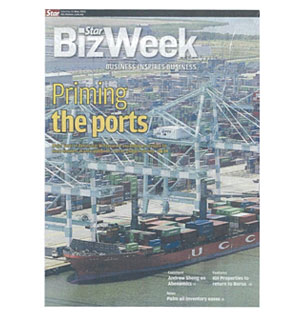
The country biggest, and the world's 16th largest, transshipment terminal located south of the country, Port of Tanjung Pelepas (PTP), has embarked on a RM1.4bil expansion plan.
PTP is a 70% subsidiary of MMC Corp Bhd while the remaining stake belongs to APM Terminal. "Construction of berths 13 and 14 is underway and expected to be fully operational by May 1 next year.
"These berths will be equipped with cranes capable of handling the new generation of 18,000 TEU vessels, which will start calling at PTP from this year.
"Its capacity will increase by 24% to 10.5 million TEU and there is strong demand for this capacity, particularly from our current customers. We expect the new berths to be utilised at an optimum level by 2015," says chief executive officer Glen Hilton.
Hilton adds that PTP is also working hard to improve its operational efficiency on the current 12 berths which will increase the existing capacity by up to 15%.
"This will ensure we have sufficient capacity to meet the requirements of our customers," he says. Hilton explains that the bulk of PTP's volumes currently are transshipment cargo as the terminal's strategic location and facilities continue to make it an attractive and competitive hub for shipping lines in South-East Asia.
"However, we are equally focused on attracting local hinterland cargo," he says.PTP handled 523,000 TEUs of local boxes in 2012, representing 7% growth year-on-year.
"The Johor market is expected to grow steadily in the coming years, especially with the development of the Iskandar region."PTP is also developing its free zone land, especially warehousing for cargo consolidation," he says.
PTP Free Zone has over 30 tenants currently, and several key clients will add one million sq ft of warehouse space this quarter.

Hardly a profit haven
On challenges, Port of Tanjung Pelepas (PTP) chief executive officer Glen Hilton says the shipping industry is extremely competitive and our customers face high pressure on freight rates and operating costs (particularly fuel prices).
"Our customers rely on us to provide their ships with high productivity on a consistent basis, whilst also offering sufficient flexibility to ensure their ships is fully loaded out of PTP."Container vessels are also getting bigger and we will see the introduction of 18,000 TEUs (twenty-foot equivalent units) ships from Maersk Line calling PTP this year and these giants require even higher productivity in port to ensure they maintain their reliable schedules." he says.