Port of Tanjung Pelepas set to become the big winner from Gemini
Shipping Watch
View Source 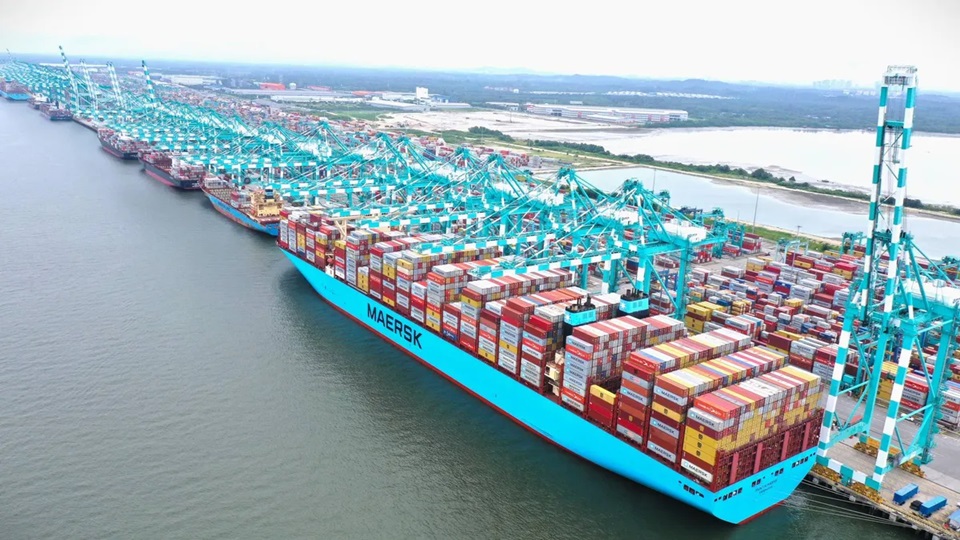 ”It is going to mean a lot for our business,” CEO of Tanjung Pelepas, Mark Hardiman says about the expected impact of Maersk’s and Hapag-Lloyd’s new cooperation, Gemini.
”It is going to mean a lot for our business,” Tanjung Pelepas chief exec Mark Hardiman says about the expected impact of Maersk and Hapag-Lloyd’s new alliance, Gemini Cooperation.
Planned to launch in February next year, the new Danish-German joint cooperation will reshuffle the container network, dividing ports and terminals into hubs and spokes – core ports and those connected to the main hubs through new shuttle services.
No doubt that Mark Hardiman, who took up the position of Malaysia’s largest transshipment port in January this year, is pleased already knowing he belong to the first group of key ports.
CEO of Tanjung Pelepas, Mark Hardiman
”The obvious impact from the hub and spoke concept is that it will give us a lot more volume. Essentially, we will be the center for the shuttles coming in to the main liners. This is an opportunity, because as a hub, you want to handle the high exchanges, it gives you the chance to have a high amount of crane deployments, what we call crane intensity,” he tells ShippingWatch and continues:
”We aim to capitalize and really push the productivity, which essentially drives capacity as well. So it means that we will be handling a lot higher volume and a lot of the investments we’re making is based on what’s coming from agreements with our customers.”
Globally high productivity
In fact, productivity is already high at Tanjung Pelepas. According to a recent survey by the World Bank, the Malaysian port, only 30 kilometres away by road from the huge Port of Singapore, ranks 5 in the category” of most efficient ports in 2023.
Efficiency has been a main differentiator when the ripple effects from the Red Sea disrupted performance and reliability at Asian key ports earlier – at least when asking Hardiman, who says that no noteworthy delays were registered in Tanjung Pelepas.
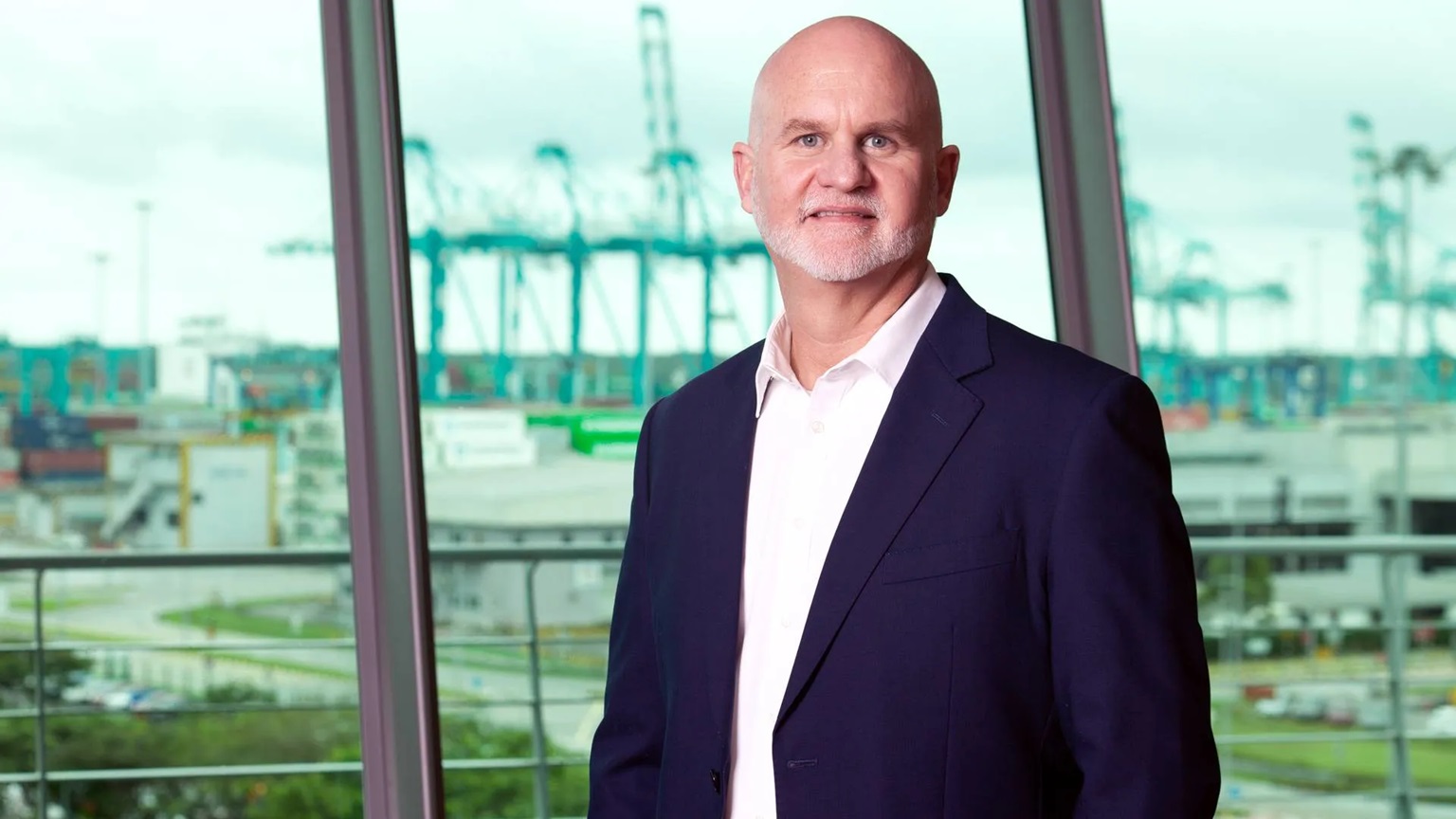 "It means that we will be handling a lot higher volume and a lot of the investments we’re making is based on what’s coming from agreements with our customers.” CEO of Tanjung Pelepas, Mark Hardiman says
A port like Singapore suffered from the turmoil to an extend that it had to revitalize an old part of the ports to allow more vessels at berth.
Today, 2M occupies 75 percent of the moves at Tanjung Pelepas, founded 24 years ago with Maersk’s ports company APM Terminals as one of the two partners, Malaysian MMC Group weighing in with 70 percent of the share capital. In that sense, the heritage is already light blue, the corporate color of Maersk who opted to move its main hub from Singapore to Port of Tanjung Pelepas once the construction of the port was completed.
A move which raised quite a stir on the opposite side of The Straits of Malacca.
What are MSC’s plans?
It is yet unknown if MSC will maintain its current business volume at Tanjung Pelepas once 2M is terminated, however, so far there seems to be nothing suggesting a shift.
In any case, the Malaysian port is already far ahead with an ambitious investment plan aiming to raise the maximum numbers of TEUs handled annually to 16 million in 2027 from today’s 12 million, already close to full utilization.
With 5.04 kilometres of quay today, 58 cranes handle all operations. This number is planned to clock in at 67 in 2027, also replacing some of the old cranes.
”We have a big order book in terms of equipment. Earlier this year, for example, we placed an order for 11 cranes which will be delivered at the end of the third quarter of next year. On top of that, we have a huge batch of RTGs arriving as well. In round numbers it will go up from 180 to 250,” Mark Hardiman says adding that the truck fleet will be expanded from 550 to around 630.
To grow the potential of the port is key to continue to be regarded attractive by the carriers and shippers and to maintain and edge with the competitors. Tanjung Pelepas, also Malaysian Westport and Port of Singapore are all located at the Straits of Malacca with Singapore’s Pasir Panjang Terminal less than a 1.5 hours’ truck ride away.
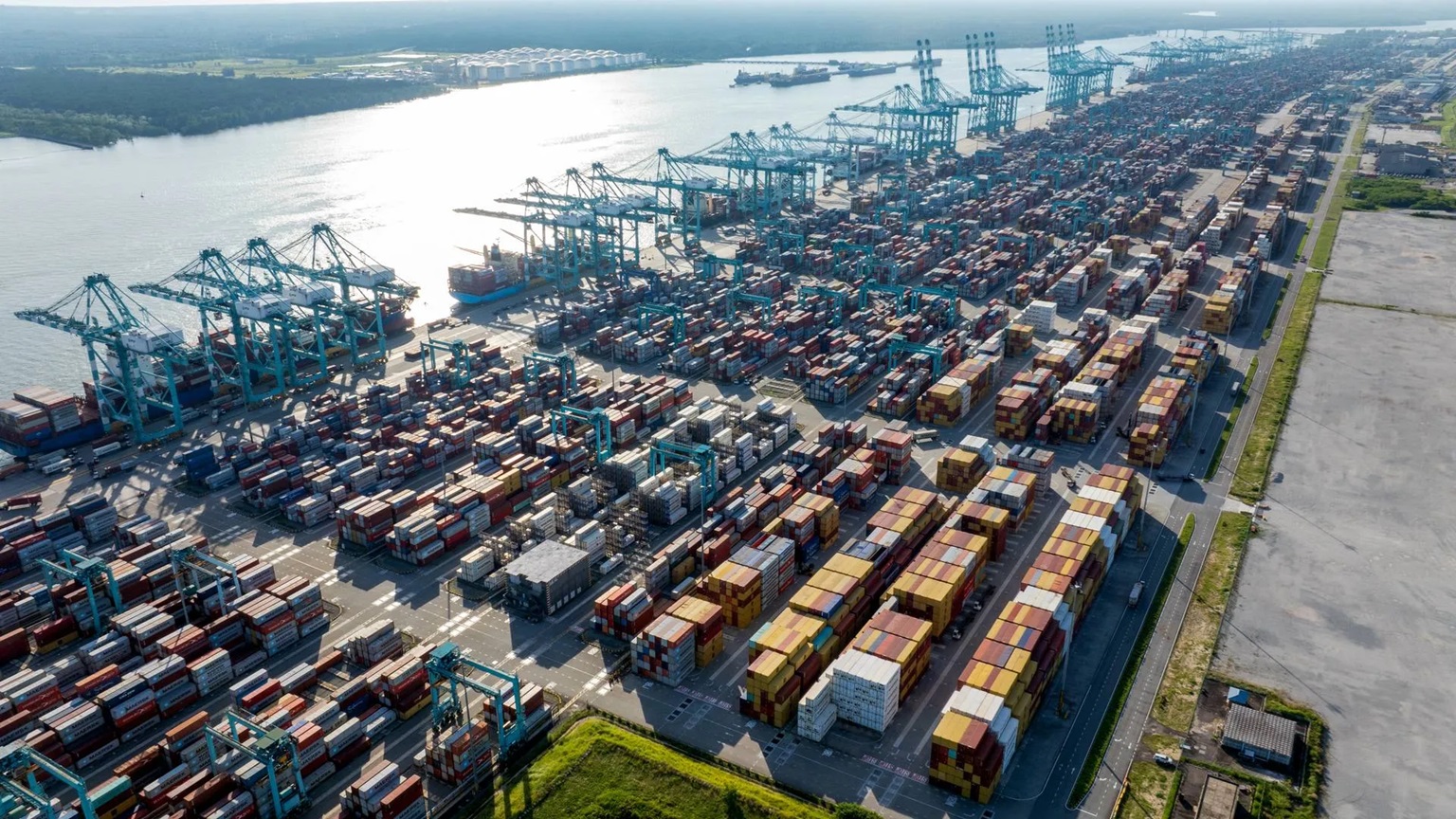 According to a recent survey by the World Bank, the Malaysian port, only 30 kilometres away by road from the huge Port of Singapore, ranks 5 in the category” of most efficient ports in 2023.
All three of them constantly striving to bag contracts with ocean liners with ships deployed in Asia-Europe or regional carriers.
”No doubts, both Singapore and Westport are our main competitors,” the CEO says.
The Port of Singapore has continued its growth trajectory with a volume last year of year of 39 million TEU, far above Tanjung Pelepas.
Among other things, Mark Hardiman will put his efforts on two differentiators to gain more business during negotiations with potential or existing customers:
Efficiency and cost.
Port of Pelepas has been able to improve productivity notably since the inauguration. According to its web site, hourly moves stood at 20 back in January 2001, had gone up to 23 moves in 2023 and now clock in at 27 moves per hour.
And with better productivity comes lower costs.
”It’s no secret, Malaysia has a cheaper cost base compared with, for instance, Singapore. Also, in the future we are looking a lot on competition in terms of the cost base,” he argues.
”The pie is big enough for us both to have a decent slice of the market. I think we can coexist quite happily in that sense as well that we have slightly different value propositions, I suppose, towards our customers in that sense as well.”