Port Tanjung Pelepas operating model key to ensuring Gemini reliability goals
Journal of Commerce
View Source 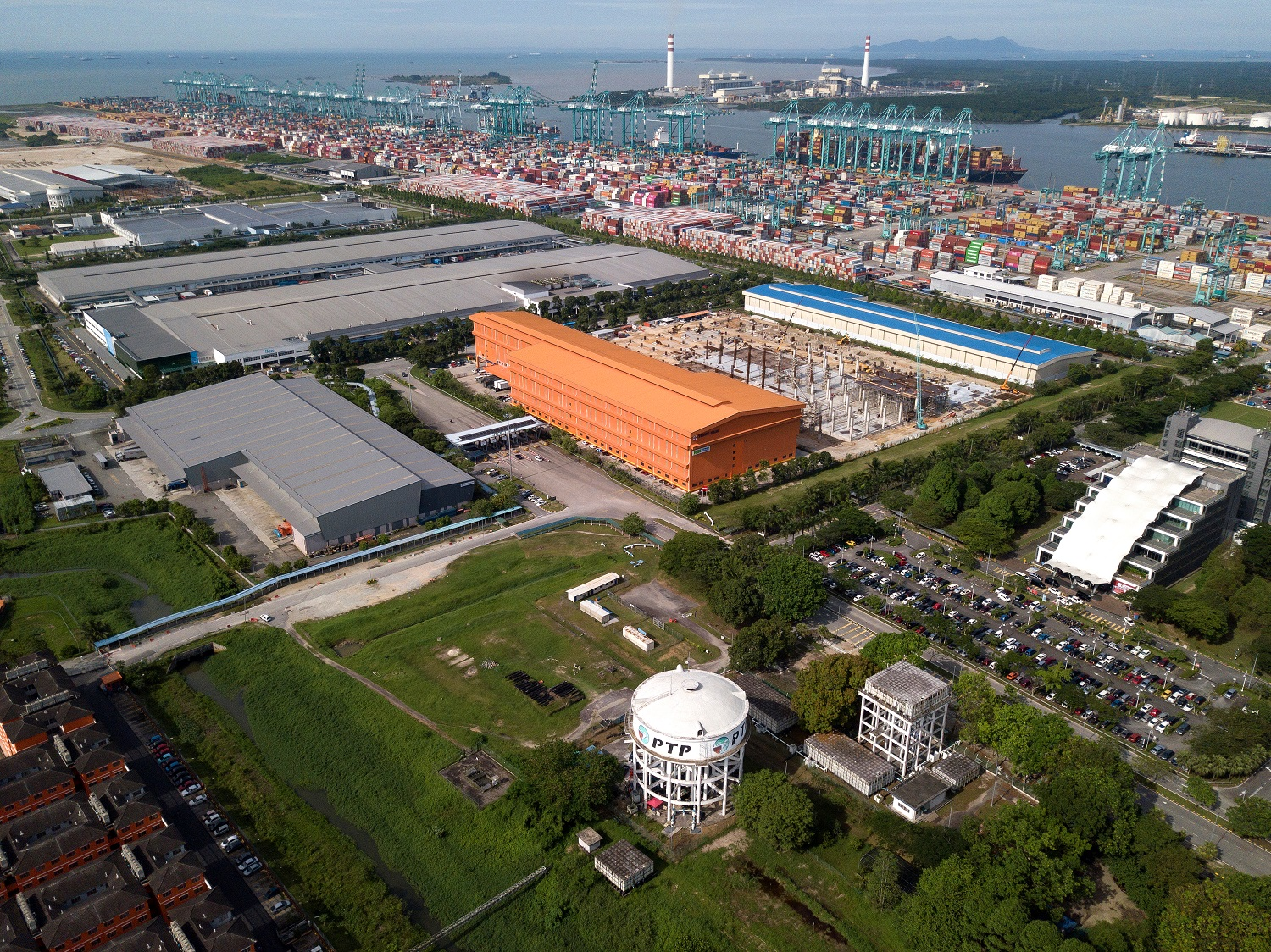 PTP in Malaysia is one of the world’s largest marine terminals, featuring the world’s longest continuous quay. Photo credit: Port Tanjung Pelepas.
Anyone curious as to how Maersk and Hapag-Lloyd will fulfill an ambitious promise of 90%+ schedule reliability once their Gemini Cooperation network is fully rolled out next year should look closely at Port Tanjung Pelepas (PTP) in Malaysia.
The facility, which is 30% owned by the Maersk terminal unit APM Terminals, is the largest relay port in the Gemini Asia-to-Europe hub-and-spoke network that aims to redefine the concept of container shipping reliability by proving that consistent reliability can be achieved via transshipment.
Gemini’s success in achieving much higher schedule reliability versus current industry performance will hang on the performance of hub ports such as PTP, as well as Morocco’s Tangier, Spain’s Algeciras, and Rotterdam to consistently orchestrate handoffs between feeder and linehaul services without delays.
Doing so will consist of nothing less than a requirement to convince a shipping public long used to direct port-to-port services and skeptical of the cost, time and lack of visibility associated with transshipments that a transshipment-based network can, in fact, solve the problem of schedule reliability.
Reliability has taken a hit as the industry has absorbed successive shocks such as COVID-19 and the Red Sea diversions — and potentially an East
Coast port strike — and as carrier alliances have learned to use blank sailings to manage short-term capacity.
For shippers, current global schedule reliability of approximately 55%, according to Sea-Intelligence Maritime Analysis, is a constant grievance amid historically elevated freight rates, contributing to issues including higher inventory costs, longer lead times and less reliable forecasting. All those issues would be significantly mitigated if consistently reliable ocean service — a fixture of bygone days in the industry — were to be restored.
The Gemini partners are telling the market the problem is solvable.
The solution, Gemini says, is operating highly utilized shuttles between origin ports and hubs that, due to only a two- or three-port shuttle rotation, can avoid the cascading delays that occur on traditional linehaul Asia-Europe rotations with up to 15 port calls, where a setback at any one port can throw the entire service off schedule.
But the idea doesn’t work without hub ports such as PTP performing almost to perfection, or nearly so.
With 10 linehaul and 10 feeder calls each week for the Gemini Asia-to-Europe network via the Cape of Good Hope, according to Maersk, there can be no risk of a scenario similar to the backups that occurred in recent months at other Asia regional transshipment hubs such as Singapore, Port Klang and Colombo.
Unique operating philosophy
At PTP, that is no small feat to achieve at one of the world’s largest terminals, a facility with one of the world’s longest continuous quays, with 58 cranes — rising to 66 by the end of 2025 — that is knocking on the door of Yantian International Container Terminal to become the world’s largest single terminal within a few years.
But the team at PTP is confident. The reason is its operating philosophy that feels unique in the world of marine terminals.
Called “Safe Operating Capacity,” it boils down to a hard-and-fast rule of not accepting into the terminal volumes beyond which the terminal deems there to be a risk of a productivity slowdown. That includes building assumptions of peak and slack periods into threshold limits for volume, lifts and yard capacity. That is in contrast to mainstream terminal policy to accept whatever volume their carrier customers bring.
“Each customer is allocated a specific number of yard TEU slots based on their contractual volume, and we work closely with them to ensure this SOC [Safe Operating Capacity] is not exceeded,” PTP CEO Mark Hardiman told the
Journal of Commerce.
The approach “safeguards terminal productivity, protects shipping lines, and ultimately benefits global consumers by preventing cargo levels from negatively impacting yard performance,” Hardiman added.
The approach has paid dividends in allowing the port to avoid the worst of recent bouts of industry congestion, a fact confirmed by ocean carrier executives familiar with PTP’s operations.
“It is indeed accurate to say that PTP experienced no congestion during both the COVID-19 period and in 2024,” Hardiman said.
The terminal will be put to the test as the Gemini network is rolled out. The terminal forecasts volumes will grow from 10.5 million TEUs in 2023 to 16 million TEUs by 2026, an accelerated growth rate versus recent years.
Another point that was clear during a recent tour by the
Journal of Commerce is that PTP is a laboratory for technology innovation, originating ideas that are developed by the terminal systems company Navis, proven as viable at PTP and then rolled out to other Navis customers. Led by Chief Operations Officer Joe Schofield, PTP has developed numerous innovations that shave seconds or minutes off the time needed to move containers around, making the terminal highly efficient.