The Port of Tanjung Pelepas has partnered with Terberg Tractors Malaysia for large fleet of electric terminal tractors
World Cargo News
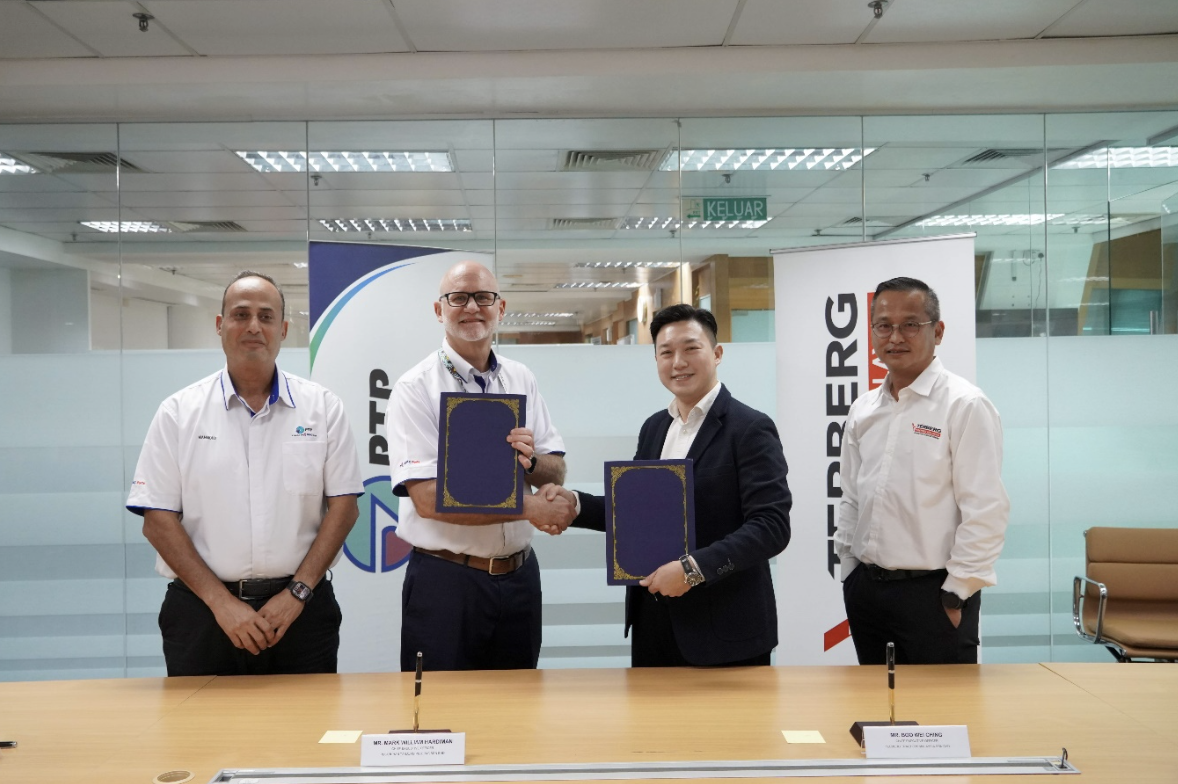
View Source 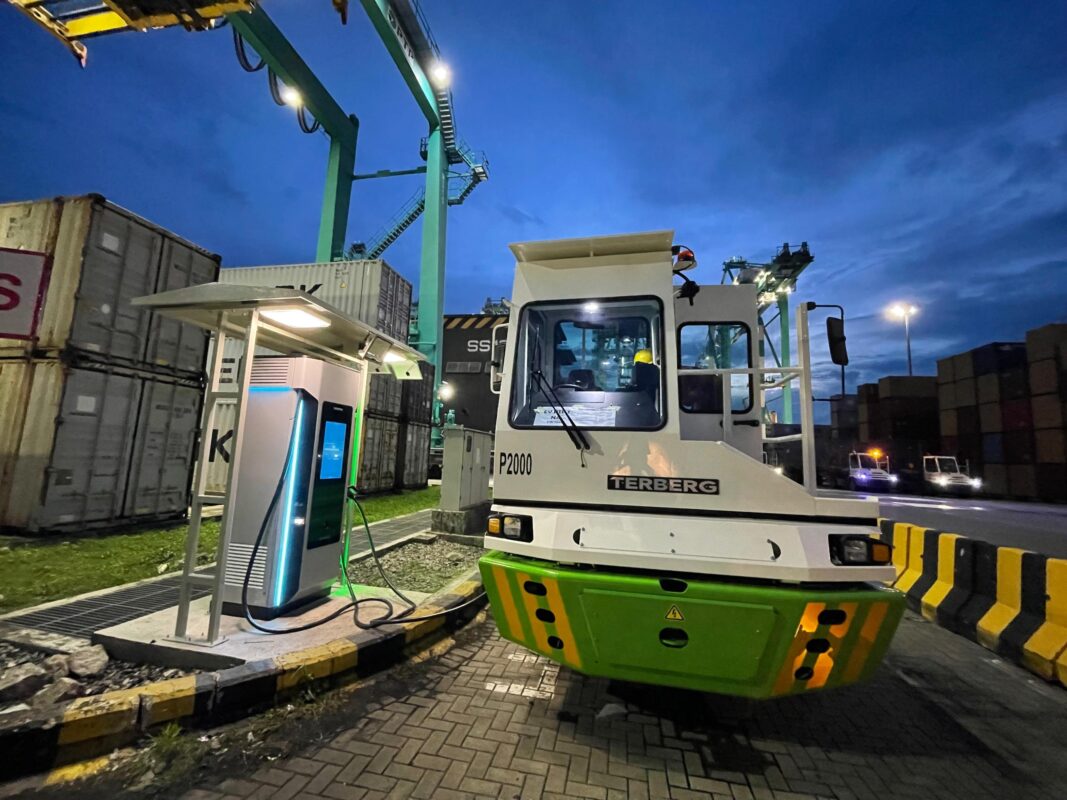 The Port of Tanjung Pelepas has partnered with Terberg Tractors Malaysia for large fleet of electric terminal tractors.
The Port of Tanjung Pelepas (PTP), a joint venture between Malaysia-based MMC Group and Netherlands-based APM Terminals, has announced it is taking a major leap forwards with electric terminal tractors (or prime movers as they are known in Malaysia).
“The port has signed an agreement with Terberg Tractors Malaysia (TTM) to purchase its first batch of electric prime movers (e-PMs), or terminal tractors, for horizontal container movement within the terminal. This fleet of e-PMs comprises 52 units, forming part of a larger order of 94 prime movers, with the remaining units powered by conventional fuel,” PTP said in a press release. TTM is a joint venture between Royal Terberg Group and Sime Darby Industrial.
The terminal tractor fleet at PTP numbers over 500 machines, making electrification a considerable challenge. In early 2023 PTP said it has signed an agreement with TTM to test one of its electric tractors, while at the same time it was considering other alternatives, including LNG and hybrid solutions. Electrification seems to have won out – in 2024 PTP Chief Executive Officer, Mark Hardiman made it known that the port was getting ready to start electrifying the tractor fleet as it works towards its target of achieving a 45% reduction in carbon emissions by 2030, based on a 2021 baseline.
PTP Chairman, Tan Sri Che Khalib Mohamad Noh stated, “This decision reflects more than a step up in fleet capability. It comes at a meaningful time as PTP marks its 25th Anniversary, a milestone that reminds us that our success has always been built on foresight, innovation and the courage to embrace change. It demonstrates our ability to deliver results that matter for our customers, our people and the world we share.”
“The procurement forms part of PTP’s key expansion plan, which focuses on optimising our existing footprint and ensuring that our equipment readiness matches our growth trajectory,” added Mark Hardiman. “This supports our aim of increasing total terminal handling capacity to approximately 16 million TEU over the next two and a half years. At the same time, sustainability remains embedded in the decisions we make as we grow.”
Lower operating costs, lower emissions
Emissions reductions and savings in operating costs are expected to be significant. “Proof of Concept (PoC) results have shown that an e-PM generates 4,000 kilograms of carbon dioxide equivalent (kgCO₂eq) per month compared to 7,600 kgCO₂eq for conventional units, achieving a 48% emissions reduction, alongside a 57% reduction in monthly operational costs per unit,” the port said.
“Beyond the new fleet of e-PMs, we have also purchased five electric small forklifts (e-SFs) and tested them under real-world operating conditions. We also participate in international collaborations, including International Maritime Organisation’s (IMO) GreenVoyage2050 initiative, the Australian Partnerships for Infrastructure (P4I), and a recent Memorandum of Understanding (MoU) with the Port of Melbourne on sustainable port operations. PTP is fully committed to maritime decarbonisation and responsible port development,” Hardiman added.
The prime movers are scheduled for delivery in 2026. As part of the agreement, TTM will provide maintenance over a period of 24 months. TTM Chief Executive Officer, Boo Wei Ching said PTP will be the first port in Malaysia to introduce its e-PMs . “TTM is proud to join PTP in their sustainability journey and remain grateful for their continued trust and confidence. We look forward to achieving greater heights in performance and innovation, in partnership with PTP,” he added.